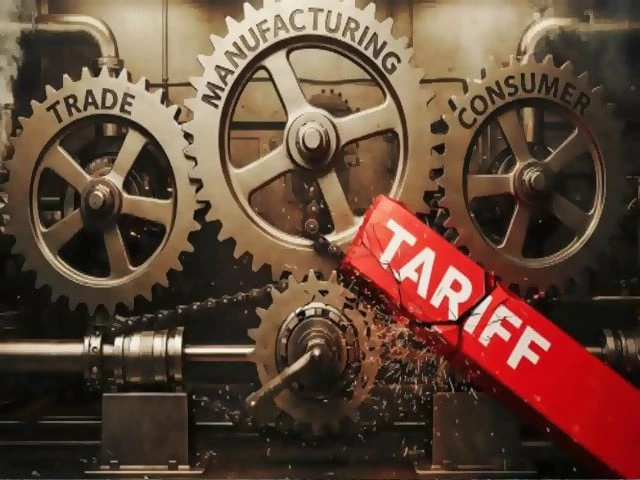
Experts warn 15% compression without energy, credit, logistics reforms may backfire
LAHORE:
Local industry has asked policymakers to design a targeted, disciplined, performance-based and time-bound industrial policy.
Policymakers are currently pushing for a maximum 15% tariff cap, which is based entirely on a trade simulation model despite the fact that this model has not undergone sector-level ground testing. “A model can calculate the consumer benefits of reducing a tariff right now. What it cannot do is reliably estimate the value of an automotive supplier ecosystem that does not yet exist,” said SM Ishtiaq, CEO of SM Engineering.
He added that it cannot quantify the technology transfer that may occur over the next decade, nor can it predict the export capabilities that emerge once domestic firms achieve scale and competitiveness. Ishtiaq said that modern economic policy globally is increasingly driven by factors beyond pure price metrics, as standard trade models are notably poor at valuing strategic resilience.
“They fail to adequately incorporate energy security, supply-chain security, technological sovereignty, external vulnerability and geopolitical risks,” he reasoned. Ishtiaq said that relying on an economy-wide 15% tariff compression and hoping competitiveness will magically emerge is a gamble Pakistan cannot afford to take.
Yousuf M Farooq, Director Research at Chase Securities, said that true competitiveness does not hinge on a single tariff number, as it depends on energy costs, financing conditions, logistics, exchange-rate stability, infrastructure quality, skills, scale and the ability of firms to absorb technology.
“Trade liberalisation can be useful when it lowers input costs, reduces anti-export bias and forces efficiency. But if it is done without addressing structural bottlenecks, it can expose domestic firms to global competition before they have the energy, credit, logistics and scale needed to compete,” he said.
He said Pakistan should rationalise tariffs, especially on raw materials, intermediate goods and machinery, but tariff compression must be sequenced with energy reform, cheaper long-term financing, better logistics, targeted technology support, export incentives and performance-based industrial policy. “A 15% tariff ceiling may be one part of reform, but it cannot be sold as an industrial strategy by itself. Without fixing the cost of doing business, Pakistan risks replacing inefficient protection with premature exposure. Neither extreme will create competitiveness,” said Farooq.