
Gulf states face the war’s sharpest shock, left to absorb fallout; Netanyahu and Trump on collision course
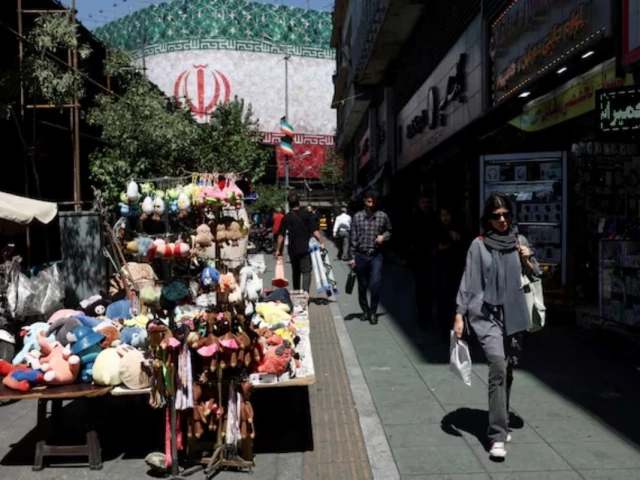
An Iranian woman walks on a street, after U.S. and Iranian officials said they had reached a deal to end their war and reopen the Strait of Hormuz, in Tehran, Iran, June 15, 2026. PHOTO: WANA (West Asia News Agency) via REUTERS
The US-Iran deal may silence the guns, but it cannot alter the verdict of more than three months of war.
The region has emerged from one of its most dangerous crises in decades with the balance of power broadly unchanged, Iran politically emboldened, and Gulf confidence in US protection deeply shaken, Gulf sources, diplomats and analysts say.
Iran remains a formidable and undefeated force capable of threatening Gulf Arab states and global energy flows, they say, while the United States has again revealed the limits of military power against a resilient adversary.
For Washington, the deal offers an exit from a costly confrontation that failed to deliver its most ambitious objectives — from forcing Tehran’s capitulation to dismantling its nuclear and missile capabilities, the sources add. For Iran, it amounts to something equally significant: survival.
After absorbing relentless US and Israeli strikes, the Islamic republic emerges battered but standing, preserving both its political establishment and much of the leverage that brought the parties to the table.
“‘Epic Fury’ has been an epic disaster,” said Aaron David Miller, a former US official and negotiator, referring to the US-Israeli campaign launched on Iran on February 28 that killed ex-supreme leader Ayatollah Ali Khamenei and top officials.
Shock to Sunni Gulf states
The Memorandum of Understanding (MoU), to be signed on Friday, provides for a 60-day cessation of hostilities during which the two sides will negotiate a permanent settlement, including disputes over Iran’s enriched uranium stockpile.
The sharpest shock, however, is being felt in the Sunni Arab Gulf states, where the stability behind decades of economic growth has been sharply challenged. By this measure, they are the war’s main losers: spectators to decisions that reshaped their security landscape, now left to absorb the fallout.
The deal, Gulf sources say, has already begun to reshape Gulf strategic thinking, eroding confidence in US protection, entrenching Iran as an enduring regional force, and accelerating a shift toward accommodation rather than confrontation.
A senior Gulf government source put it bluntly: any de-escalation is positive, but the situation is unequivocally worse than before the war.
The emerging deal also appears unfavourable to Israel, according to three Israeli officials, as it omits its core demands, including dismantling Iran’s enrichment capability and curbs on its missile programme.
Read More: Those who started the war were defeated hugely: Iran’s Baghaei
Officials said Israel was caught off guard when US President Donald Trump signalled on Thursday that a deal was close, highlighting its limited influence over the terms. Prime Minister Benjamin Netanyahu raised the issue directly with Trump, according to a statement from his office, which stressed that Israel was not party to the agreement and outlined its conditions for a final deal — ending Iran’s nuclear ambitions.
Far-right National Security Minister Itamar Ben-Gvir rejected the deal, saying Israel was not bound by it “in any way”.
Gulf capitals shift towards engagement with Tehran
The agreement may end this phase of the conflict, Gulf sources say, but it does not resolve the strategic dilemma it has exposed: Iran remains a potent force, the Strait of Hormuz has emerged as a recurring pressure point, and the assumptions underpinning Gulf economies look more fragile than at any point in recent memory.
For Gulf states, the US-Israeli campaign has triggered precisely the consequences they had long feared: Iranian strikes on energy and civilian infrastructure and disruption to Hormuz, dealing a heavy economic blow.
Gulf capitals may welcome a pause in fighting, but many are drawing a sobering conclusion: neither US nor Israeli force has removed the Iranian challenge, while the costs of confrontation have fallen disproportionately on those caught in between.
“More and more Gulf states are coming to realise that Iran is here to stay, that it retains the capacity to disrupt the regional order,” said Middle East scholar Fawaz Gerges.
“The Gulf states don’t trust Iran. They had hoped the United States would bring about regime change. The reverse has happened,” Gerges said. “Now more and more Gulf rulers realise they cannot depend on the US, or Israel to deliver security or stability.”
That reassessment marks a deeper shift. Gulf states have long distrusted Iran but relied on US power to contain it. Now, engagement with Tehran has already begun.
Gulf capitals have intensified contacts with Tehran lately, seeking economic and security understandings to reduce the risk of confrontation, regional sources say.
Before the war, the central regional question was the scope of Arab–Israeli normalisation, Gerges said. In its aftermath, the focus is shifting toward Gulf-Iran accommodation.
While Washington will remain an indispensable partner, regional analysts say the conflict is likely to accelerate a quiet but consequential realignment, with Gulf states diversifying defence ties and hedging against future shocks.
Washington’s objectives missed
Saudi analyst Abdulaziz Sager is more explicit. In his view, Washington has failed to deliver its declared objectives from regime change to curbing Iran’s nuclear programme, while handing Tehran two new points of strategic leverage — the weaponisation of Hormuz and the ability to directly threaten Gulf states.
“They (the Americans) switched from unconditional surrender to an MOU. They caved in,” said Sager, Chairman of the Saudi-based Gulf Research Centre. “They said they would change the Iranian regime — they couldn’t. They said they would resolve the missile and nuclear file — that didn’t happen.”
What is being signed, analysts say, is less a peace accord than a mechanism to halt the fighting.
At its core, fundamental disputes remain unresolved: Iran’s enriched uranium, enrichment levels, sanctions relief, security guarantees, and control of key waterways.
The MoU, Miller argues, is not a resolution but “a ticket to negotiation” — a first phase that buys time and space for talks whose success is far from guaranteed. Its structure echoes the Gaza ceasefire frameworks: a pause that defers the hardest issues, with no guarantee they will ever be resolved.
“What is about to be signed is not peace, but recognition: that the war’s ambitions outran its achievements; that the battlefield produced a stalemate, and that Gulf states, which bore the heaviest costs, are recalibrating their security on shakier ground than at any point in time,” said Miller.
Having withstood both internal unrest and external military pressure, he argues that Iran now faces a different question: whether this war has reinforced, rather than weakened, its sense of resilience, with implications for deterrence in the years ahead.
Netanyahu and Trump on collision course
Meanwhile, Netanyahu bet that his joint war alongside Trump would topple Iran’s clerical rulers and bolster himself ahead of elections at home, as the architect of a US-Israeli alliance that would reshape the Middle East.
Instead, Israel’s longest-serving prime minister is on a collision course with Trump as the US president seeks to extricate himself from the war, with both men’s goals unmet and Israeli military operations tied down in Lebanon.
For now, Israeli officials have been cautious in public for fear of angering their most important ally, known for being prickly towards critics.
But in private conversations, the frustration is clear. The preliminary agreement is “terrible for Israel”, said one senior Israeli official, giving a frank assessment on condition of anonymity. “And there is no one in the Israeli leadership who views it otherwise, from the prime minister to the chief of staff.”
Washington says that over the next 60 days, when a ceasefire is in place, it will negotiate full terms that will address US and Israeli concerns, especially over Iran’s nuclear programme.
But Israeli officials told Reuters they thought the negotiating period under the deal was likely to be extended, tying Israel’s hands from taking military action, while its concerns remain unresolved.
Netanyahu and Trump have repeatedly clashed over Israel’s refusal to constrain its pursuit of Iran-backed Hezbollah in Lebanon, where a cessation of hostilities is a key Iranian demand.
At the start of the month, Trump described Netanyahu as “fucking crazy” in an angry phone call, ordering him not to strike Beirut while the US was seeking a deal with Iran.
Netanyahu called off attacks that day, but struck Beirut’s southern suburbs a week later, provoking Iranian missile strikes on Israel and a public rebuke of both sides from Trump.
Hours before the US and Iran announced their interim deal, Israel hit the Lebanese capital again on Sunday, after rockets were launched at Israel from Lebanon, fire that Trump described as “small and meaningless”.
Read More: Iran-US deal ‘bad for Israel,’ says Israeli finance minister
Netanyahu, facing autumn elections he is projected to lose, may be more willing to defy Trump as he contends with an Israeli public that opinion polls show has grown sceptical of the US president’s commitment to Israel’s security.
“This is a pretty stark moment of divergence of interests,” said Dan Shapiro, a former US ambassador to Israel under the Obama administration, now with the Atlantic Council think tank.
“He will try to not openly oppose [the deal], so as not to get into a brawl with Trump,” said Shapiro. “But he will indicate Israel is not bound by it, and Israel reserves its rights.”
Israel says it’s not bound by US-Iran pact
The MoU between the US and Iran is expected to be signed on Friday in Switzerland. While precise terms were not immediately known, mediator Pakistan said the pact called for a permanent halt to military operations on all fronts, including in Lebanon.
Netanyahu’s defence minister, Israel Katz, said in a statement on Monday that troops would remain deployed in buffer zones Israel has seized in Lebanon, Syria and Gaza “indefinitely” to eliminate what it perceives as militant threats.
“If Iran attacks Israel due to the events in Lebanon — we will attack it with all our might,” Katz said.
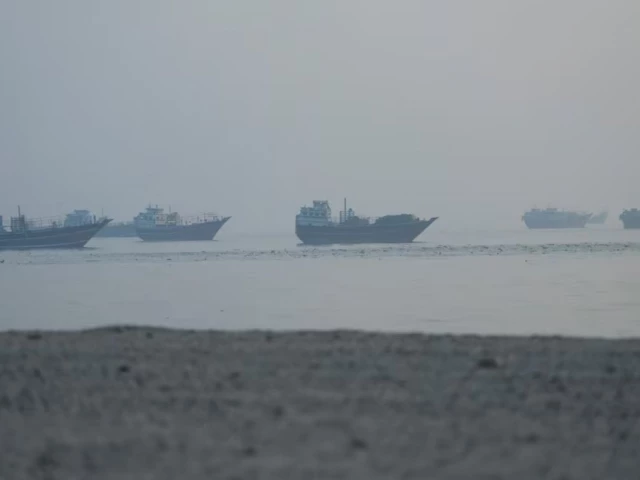
The interim deal would reopen the Strait of Hormuz oil chokepoint while leaving the fate of Tehran’s nuclear programme to be resolved during a 60-day negotiation period towards a final deal.
Two other issues that Netanyahu and Trump had both declared as justifications for the war at its outset — curbing Iran’s missile programme and ending its support for regional armed groups — are not thought to be on the agenda during those talks.
Three Israeli officials said Israel sees it as very likely the 60-day pact will be extended to 90 days, with the US maintaining its deployment of military assets in the region as it negotiates a broader deal.
Two other Israeli officials said that Israel was caught by surprise last week when Trump first said that a deal with Iran was close. They acknowledged that Israel has had little success in influencing the talks.
All of the officials spoke on condition of anonymity because they weren’t authorised to speak publicly.
Netanyahu, who often clashed with Washington under the administrations of Democrats Barack Obama and Joe Biden, has long portrayed himself to the Israeli public as being uniquely adept in dealing with the Republican Trump.
During Trump’s first term, Israel secured major policy changes from Washington, which moved its embassy to Jerusalem and backed the “Abraham Accords” that brought Israel formal diplomatic ties with the UAE and Bahrain. On Iran, Trump ditched a nuclear agreement negotiated under Obama that Israel had long complained was too soft.
During the 2019 elections, Netanyahu displayed massive campaign billboards in Tel Aviv and Jerusalem showing him and Trump smiling and shaking hands.
But now, the US-Iran pact undermines Netanyahu’s case that a close relationship with Trump sets him apart from other candidates for prime minister, said Jonathan Rynhold, a political scientist at Bar-Ilan University, near Tel Aviv.
“[Netanyahu] will be unable to sell this agreement to the Israeli public,” Rynhold said. “The best that he can hope for is that they fail to reach an agreement and the war restarts to Israel’s advantage in 60 days.”
According to a poll released Friday by the Israel Democracy Institute, just 41% of Jewish Israelis think their security is a central consideration for Trump, down from 64% in March.
Eli Cohen, Netanyahu’s energy minister, said that Israel would be prepared to act alone if Iran rebuilds its nuclear and missile capabilities, though he said the chances of Tehran taking that step during Trump’s tenure were low.
“If Iran tries to renew its nuclear and ballistic missile programmes — we will be there and act,” Cohen told Israel’s public broadcaster Kan.