ISLAMABAD:
The International Monetary Fund (IMF) on Wednesday kept Pakistan’s economic growth forecast unchanged at 3.5% for the new fiscal year, while warning about the possibility of a renewed Middle East conflict that could heighten price volatility.
In an update to its World Economic Outlook (WEO) report, the IMF showed Pakistan’s economic growth rate at 3.5%, with no change in the outlook compared to its last two reports since April this year.
The report suggests that Pakistan’s economy will marginally slow down in the new fiscal year compared to the estimated 3.7% growth achieved in the previous fiscal year. The government has set a growth target of 4% for FY2026-27, which is even lower than the 6% rate needed to create 4.5 million jobs annually to reduce high poverty and unemployment.
Prime Minister Shehbaz Sharif”s two terms since 2022 have failed to create enabling conditions for economic acceleration without triggering fiscal and external crises.The IMF’s global report coincides with renewed attacks by Iran and the United States against each other’s commercial and military installations, endangering the fragile temporary ceasefire.
“The possibility of renewed Middle East conflict looms large and could extend commodity price volatility, further threaten supply chains, raise prices, and weigh on financial conditions,” according to the report. Trade fragmentation could accelerate, possibly hurting output and increasing prices, it added.
The IMF said renewed conflict would propagate through a further increase in commodity prices and extended volatility, supply shortages, and exchange rate pressures. The muted increase in oil prices and their contained impact on activity owe to the release of inventories, which are now getting closer to multiyear lows and could reach stress levels should supply disruptions persist or hoarding gather steam, it added.
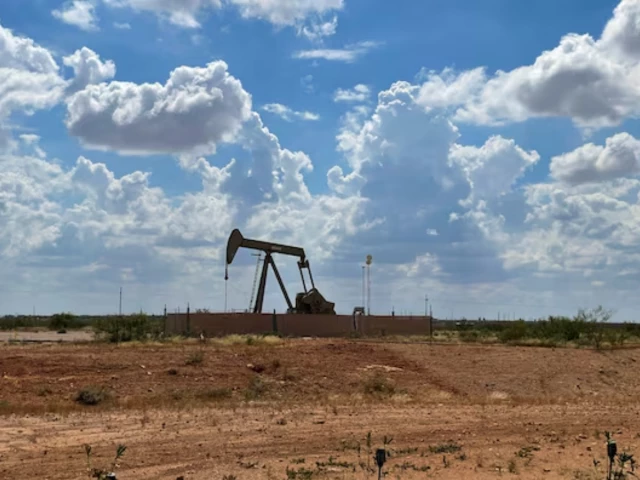
After the US withdrew Iran oil export permission coupled with aerial attacks, crude oil prices have shot up by $8 per barrel within two trading days. As a result, diesel prices for Pakistani imports have increased by $5 so far, while petrol prices remained largely stable, which may lead to upward price adjustments on Friday if no corrections are seen in two days.
The IMF said global headline inflation is expected to increase from 4.1% in 2025 to 4.7% in 2026 before declining to 3.9% in 2027. These projections indicate that the disinflation trend in place since early 2024 has stalled, it added.
The IMF said global economic activity and the outlook are being shaped by two major forces pushing in opposite directions: the negative supply shock induced by the war in the Middle East and the ongoing positive technology shock manifesting in accelerated momentum of the global technology cycle, driven by advances in artificial intelligence (AI) tools.
The IMF said movements in and repercussions from the main channels of transmission have been relatively limited.
However, transmission is still in its early stages – commercial and strategic destocking have provided temporary relief from reduced energy flows, while forward-looking indicators such as supply-chain pressures and manufacturing purchasing managers’ indices point to softer momentum ahead, though some countries are experiencing more strain than others.
The average petroleum spot price index is projected at $89 per barrel, 9% higher than assumed under the reference forecast in the April 2026 report, and natural gas prices at $15, 5% higher than the April reference forecast price.
The relatively muted increase in global oil prices reflects the fact that part of the decrease in oil flows through the Strait of Hormuz has been offset by a drawdown of inventories, reducing the need for oil consumption and production to adjust through prices. Global economic growth is projected at 3% in 2026 and 3.4% in 2027, down from the average of 3.5% observed in the last two years. The forecast is broadly unchanged compared with the April 2026 WEO.
The modest slowdown reflects the effects of the Middle East war being partly offset by accelerated demand-driven momentum in the global technology cycle thanks to advances in AI and its adoption.
The impact varies widely based on countries’ exposure to the war and their position in the technology value chain. Energy exporters outside the conflict zone benefit from favourable terms of trade, while economies integrated into the technology-led upturn see stronger activity even if they are energy importers, according to the report.
In the Middle East and Central Asia, growth is projected to drop sharply to 0.7% in 2026 before rebounding to 6.5% in 2027. This represents a downward revision of 1.2 percentage points for 2026 and an upward revision of 1.9 percentage points for 2027, reflecting a longer closure of the Strait of Hormuz relative to the April WEO assumptions and a corresponding larger rebound.Iraq, Kuwait, and Qatar – commodity producers most affected by disruptions to energy output and transport – are projected to experience sharp contractions in 2026, followed by double-digit expansions in 2027. Saudi Arabia is somewhat less affected, with growth forecasts of 1.7% in 2026 and 5.5% in 2027.