

TEHRAN/DUBAI:
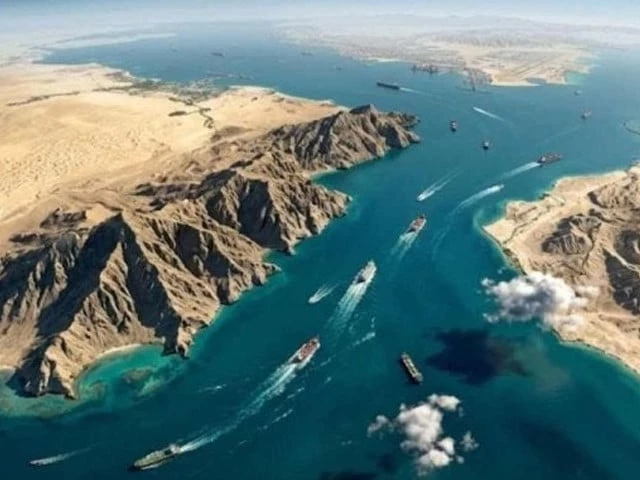
Iran’s Revolutionary Guards (IRGC) said on Monday that fibre-optic internet cables passing through the Strait of Hormuz could be brought under a permit system, as Tehran announced the formation of a new body to manage the key waterway.
The strait, through which about 20% of global oil supplies pass, is currently a flashpoint amid tensions between Iran and the United States linked to the wider regional conflict. A tenuous ceasefire announced on April 8 still holds, but the broader peace process remains stalled.
“Following the imposition of control over the Strait of Hormuz, Iran, citing its absolute sovereignty over the bed and subsoil of its territorial sea, could declare that all fibre-optic cables passing through the waterway are subject to permits,” the IRGC said in a social media post.
Simultaneously on Monday, Iran’s Supreme National Security Council announced on its official X account the formation of the Persian Gulf Strait Authority (PGSA), saying it would provide “real-time updates” on operations and developments in the strait.
The PGSA later said in another post that it was “the legal and official representative authority of the Islamic Republic of Iran responsible for managing transit through the Strait of Hormuz.” It added that “navigation within the designated jurisdictional area of the Strait of Hormuz” would require “full coordination” with the authority, and that passage without authorisation would be considered illegal.
Earlier, Iranian English-language broadcaster Press TV had said the arrangement constituted a “system to exercise sovereignty over the Strait of Hormuz” and that ships passing through the strait would be sent instructions by email.
According to data from Kpler, traffic through the strait was slightly higher between May 11 and 17, returning to average levels recorded since the start of the Middle East conflict. A total of 55 vessels crossed the waterway during that period, a sharp increase from the previous week’s 19 vessels.
Meanwhile, the Middle East remains on edge following Sunday’s drone incidents reported by the United Arab Emirates (UAE) and Saudi Arabia. The drone strike triggered a fire near a nuclear plant in the UAE but caused no major damage.
Saudi Arabia said it intercepted and destroyed three drones that had entered from Iraqi airspace. However, Iraqi authorities stated they did not detect any drones launched from their territory towards Saudi Arabia. The Iraqi Foreign Ministry said the matter was under investigation.