
Iran fired dozens of missiles at Israel overnight, with Israel responding by striking military targets in Iran
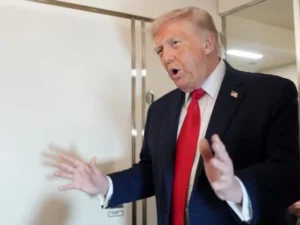
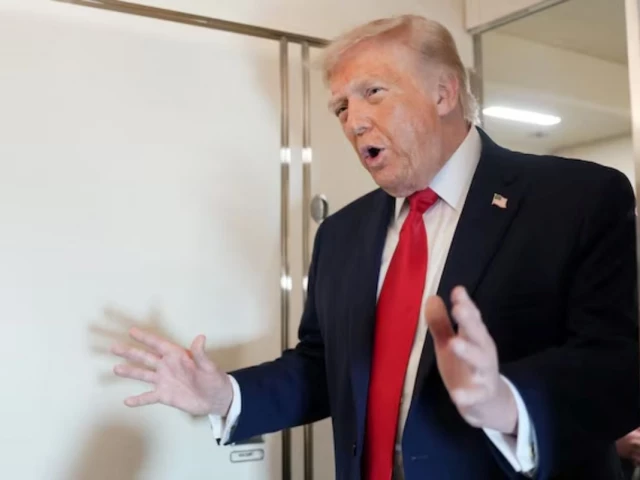
US President Donald Trump speaks to members of the media on board Air Force One while flying from Joint Base Andrews to Chippewa Valley Regional Airport in Eau Claire, Wisconsin, US, June, 5, 2026. REUTERS
United States President Donald Trump on Monday told Iran and Israel to stop fighting after the two foes attacked each other’s territory for the first time since a shaky ceasefire put five weeks of war on hold.
Iran fired dozens of missiles at Israel overnight and Israel responded by targeting military sites in the Islamic republic, sparking fears the escalation could usher in a new full-scale conflict after the April 8 truce.
With Israel’s response, Prime Minister Benjamin Netanyahu apparently defied calls by his ally Trump for restraint, against the background of reports of an increasingly testy relationship between the two men.
“Israel and Iran must immediately stop ‘shooting’,” the US leader wrote on his Truth Social network.
Minutes later, he added in a new post that “final negotiations” towards peace were proceeding “subject to ignorance or stupidity getting in its way”.
Tehran’s strikes followed attacks by Israel against targets of Hezbollah in the southern suburbs of Beirut.
Iran had repeatedly warned it would strike Israel if the Lebanese capital was targeted.
Oil prices surged more than 5% on worries that war could break out again, with hopes now punctured of a rapid end to the standoff that has seen shipping limited through the key Strait of Hormuz trade bottleneck amid fears of global energy and goods shortages.
Diplomacy to be ‘affected’
The strikes also came at a critical moment with diplomatic efforts to end the conflict involving mediator Pakistan on a knife-edge.
Read More: Iran fires missile barrage at Israel
Iranian foreign ministry spokesman Esmaeil Baqaei warned at a press conference in Tehran attended by AFP that it was “perfectly natural that the diplomatic process initiated to put an end to this imposed war would be affected”.
نه ایران برای لبنان میجنگد و نه لبنان برای ایران، هر دو دشمن غدار مشترک دارند. رژیم صهیونیستی، لبنان اشغالشده و ایران تجزیه یافته را میخواهد و در این احوال کنار هم بودن، راهبرد ضروری دفاعی است و نه فقط یک همدردی انسانی.
موضوع را غلط تصویر نکنیم.— Seyyed Abbas Salehi (@S_A_Salehi) June 8, 2026
But he added: “Diplomatic consultations are naturally continuing in all circumstances.”
As he was speaking at the foreign ministry, a huge explosion shook the building, followed by repeated explosions believed to be from air defence systems, the AFP reporter said.
Local media in Iran reported that a “hostile drone” was shot down over Tehran by air defences.
Interior Minister Mohsin Naqvi visited Tehran to deliver what he said was a “special letter” to Iran’s supreme leader, Mojtaba Khamenei, according to Iranian state television. He has since travelled back to Pakistan, an official Pakistani source said on Monday.
Tehran has insisted that any deal to permanently end the war must also halt the parallel conflict in Lebanon, where Israel was pursuing a campaign against Hezbollah.
‘Dangerous game’
No casualties have been reported in either Israel or Iran.
The Israeli military said it struck and dismantled Iranian defence systems deployed across several areas in the country. Iran fired nearly 30 missiles towards Israel since Sunday night, an Israeli military official said.
AFP journalists in Jerusalem and the West Bank city of Ramallah heard a series of explosions and the Israeli army said it worked to intercept a new wave of Iranian missiles.
Iran’s Revolutionary Guards said they had struck Israel’s Nevatim and Tel Nof air bases and had also targeted a petrochemical facility in Israel in retaliation for an attack on a similar site in southwestern Iran.
The Guards warned that Israel “has initiated a dangerous game, the scope of which will encompass all energy-related targets in the region”.
A military source told the Tasnim news agency that “Iran is prepared for a long-term war with the Zionist regime and for strikes against US interests” in the region.
‘I call the shots’
Yemen’s Iran-backed Houthi rebels, meanwhile, announced a missile attack on Israel on Monday, the first since early April, and declared a ban on Israeli shipping in the Red Sea.
The European Union’s top diplomat, Kaja Kallas, called on both sides to “sit down to a negotiation table and agree”, adding that “the region does not need an escalation.”
Also Read: Iran military announces halt to operation against Israel
It also remains unclear who is leading decision-making in Tehran, with Mojtaba said to have been wounded in a US-Israeli strike, yet to appear in public after taking over from his father, Ali Khamenei, who was killed on the first day of the war on February 28.
On Monday in Tehran, there was little sign of any return to war. Under sunny skies, cafe terraces were packed, while motorcycles weaved at high speed through the lunchtime traffic, an AFP correspondent in the capital said.
But the traffic seemed lighter than usual for a weekday, suggesting that some people had stayed home and there were also many more people queuing at gas stations.